


How to See More of Europe Without Constant Packing
This post may contain affiliate links, which means I may earn a small commission if you book through them, at no extra cost to you.
Moving Too Much
We were three hours down the road to the coast before it hit me how strange the question sounded to the person I asked it to.
I'd asked a woman in a small English village where she'd go for a day trip. Somewhere close, I said, an hour or so away. She looked at me like I'd asked her to drive to another country. Fifteen minutes, she said. Twenty at the outside. That's a day trip to her.
I'm from Central Texas. My commute is an hour, sometimes an hour and a half each way depending on traffic. Getting to the coast from the Austin area is a solid three hours, and we call that a day trip.
The kind you do on a Saturday without thinking twice.
I'll drive two hours for a concert and a nice dinner on the Riverwalk and be home by midnight. Texas is roughly the size of France. Our whole idea of what counts as "far" got calibrated on a completely different scale than a European's did.
That gap in perspective turns out to matter a lot when you're planning a trip to Europe, because most of the advice out there was written by people who think in European commute times, not American ones. A
Once you understand the gap, an entire category of travel anxiety just dissolves.
Why the Bus-Tour Itinerary Wears Couples Out
See This Exact Trip Idea Laid Out
The free Bradford-on-Avon itinerary shows you a hub-and-spoke trip built this way, day by day.
Get the Free ItineraryMost people don't plan a trip to Europe every year. For a lot of us, it's every two or three years if we're lucky, not several times a year.
So the instinct is to try to see everything, because who knows when you'll be back.
That instinct is what drives the classic bus-tour structure: a new city almost every night, luggage on the bus, breakfast buffet at eight, wheels up at nine, arrive somewhere new by four in the afternoon, unpack, dinner with the group, bed, repeat.
You do see more that way. Nobody's arguing with that. But it's also genuinely exhausting, and if one half of the couple has been dreading the trip because of stories about literally running to catch a connecting train, that dread doesn't come from nowhere.
It comes from a real pattern of travel that involves moving constantly, packing every couple of days, and never quite settling in anywhere.
For a lot of Gen X couples, especially the partner who wants to actually rest on a vacation, that constant movement is the whole objection.
Not Europe itself. Not the food or the language or the cost.
The moving.
There's a school of thought that answers this with slow travel: pick one town, stay two weeks or a month, fully integrate into the place.
That works for some people. It also means you might not see the cathedral three towns over that you've wanted to see your whole life.
For most of us on a once-every-few-years trip, that's a real tradeoff we don't want to make.
The better answer sits between those two extremes. Pick one spot and stay at least five days, but choose that spot specifically because of what's within day-trip range of it.
That's not a compromise between "see everything" and "don't move."
It's a completely different structure that gets you most of what both people want.
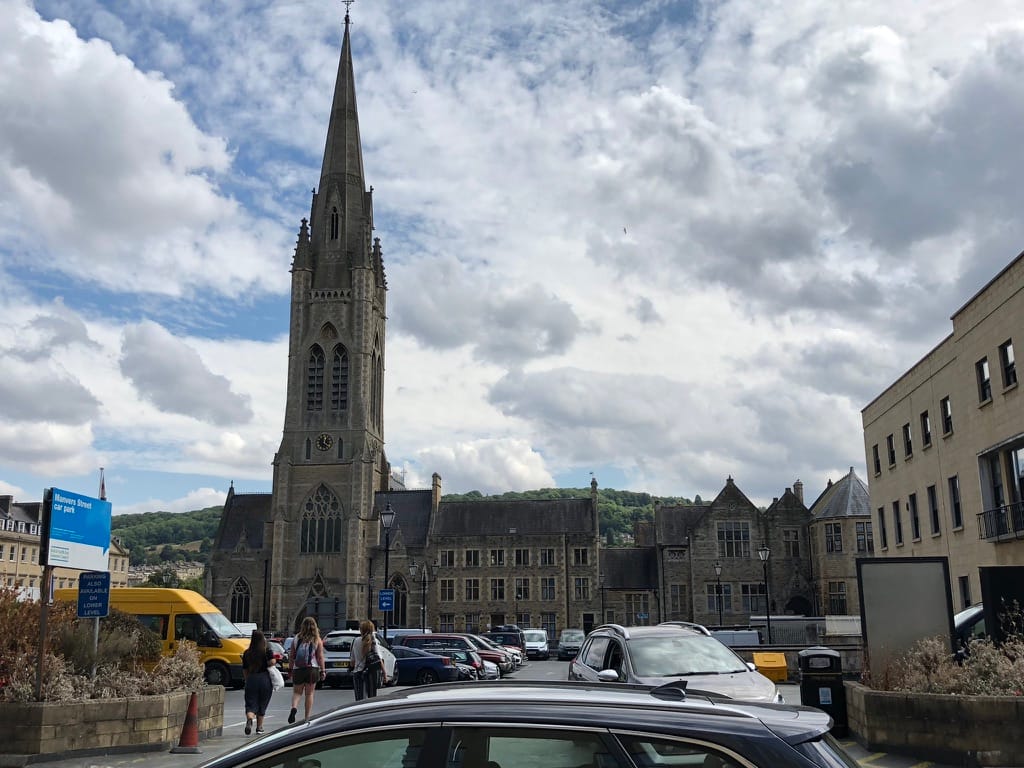
Bath, England
Bath Abbey was a short walk from the train station.
How Far Is Too Far for a European Day Trip
Here's where the American commute time actually becomes useful information instead of just a funny aside.
Ask a European where you can day-trip from a given town, and you'll often get an answer calibrated to a world where fifteen minutes counts as a real trip.
Ask about anything an hour or more away, and you may get a polite version of "why would you do that?"
That answer isn't wrong; it's just built on a totally different sense of scale than the one most Americans, and especially Texans, grew up with.
We already do this. An hour-plus commute each way is normal for a huge number of us. A three-hour drive to the coast for the weekend barely registers as a big deal. So when you look at a hub town and see that the nearest big attraction is an hour and a half away by train with a transfer, that's not a red flag.
That's a completely ordinary Tuesday by American standards.
Take Bradford-on-Avon as an example. Bath is twelve minutes away, so close it barely counts as a day trip at all.
Stonehenge, with a train and a bus transfer, runs closer to an hour and a half each way.
Avebury's stone circle is similar, maybe an hour and forty-five minutes door to door.
None of that is a big deal if you already know how to think about distance the way we do at home. You're on-site by ten in the morning, you get a full six to eight hours there, and you're back at the same hotel room you woke up in that morning.
No new check-in. No new key. No figuring out where anything is in an unfamiliar building at nine at night.
Compare that to the alternative, which I've done more times than I'd like to admit: check out by eleven in the morning because that's when the hotel needs the room, drag your bags around a city you're trying to sightsee in, and then can't check into the next hotel until three or four in the afternoon.
You're carrying everything you own while trying to enjoy a museum.
It's hard. It's not romantic or adventurous; it's just hard, and it wears people down in exactly the way that makes a reluctant travel partner more reluctant, not less.
The hub-and-spoke structure sidesteps that entirely.
Find a home base with plenty day-trip options within roughly ninety minutes to two hours, and you get the variety of a moving itinerary without the physical cost of actually moving.
What Happens When You Miss a Train in Europe
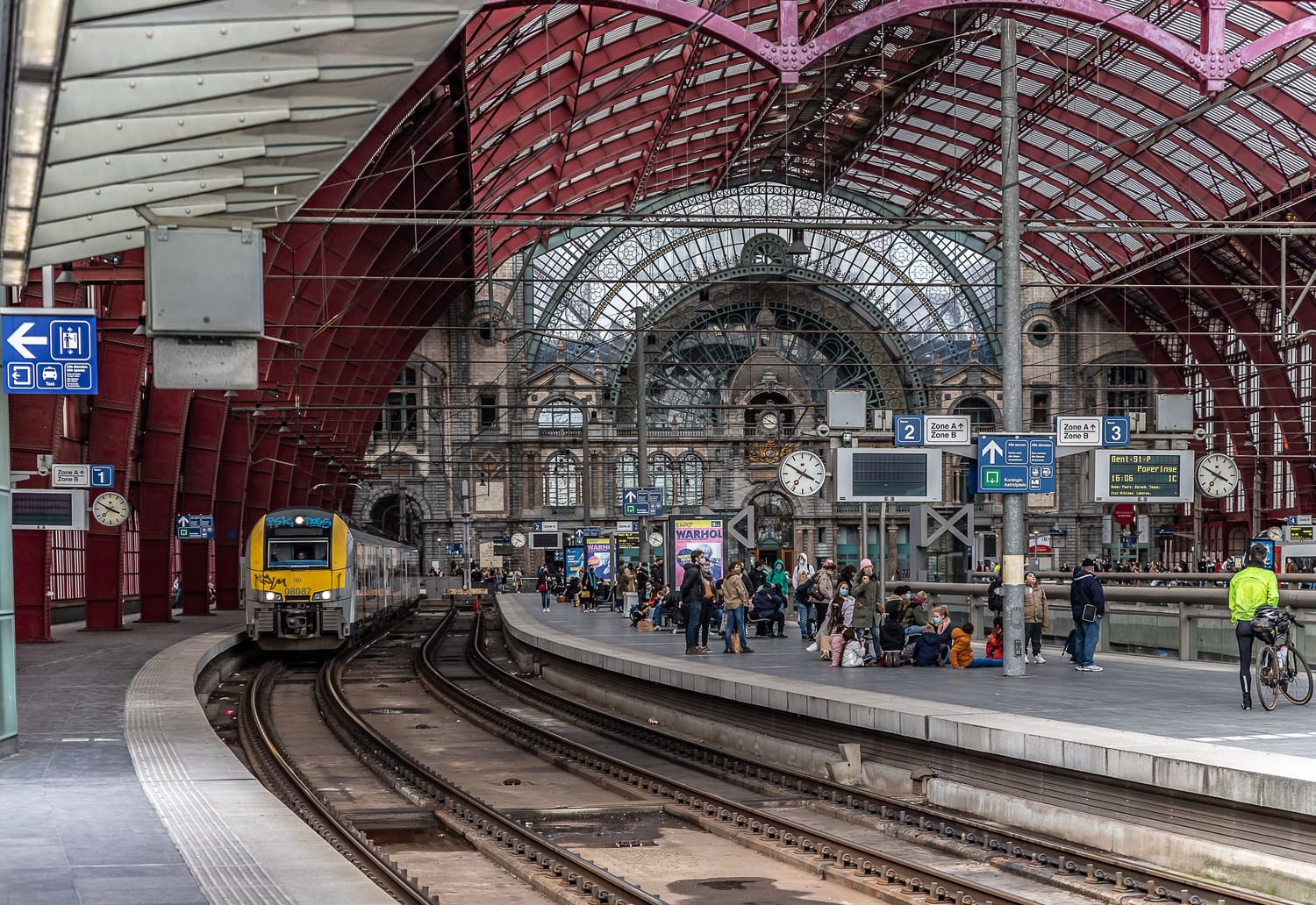
The other fear that comes up constantly, especially from someone who hasn't traveled much in Europe, is the missed connection.
What if we get to the platform late?
What if the train's already gone?
What if the whole day falls apart because of one missed departure?
That fear makes complete sense if the only scheduled transportation you're used to is a plane. Miss a flight, and it's a real problem: rebooking, fees, sometimes an entire day lost.
So it's natural to assume trains work the same way.
They don't, and understanding that changes the whole emotional weight of the trip.
A flexible rail pass, the kind that's good for a set number of travel days across a longer window, means you're not locked into one specific train at one specific time.
If you miss it, you take the next one.
If a random train station looks charming enough to get off and wander for twenty minutes, you get off and wander, then catch a later train to your actual destination.
The pass counts a travel day regardless of how many times you get on and off within it, so there's no penalty for changing your mind.
Once you stop applying the airplane mindset to European rail, the whole missed-connection anxiety mostly evaporates.
It's not a strict schedule; you're not tied to it. It's frequent, flexible, and forgiving in a way American transportation seldom is.
Missing a train isn't a crisis. It's just part of how the day goes sometimes, and it's genuinely fine.
The one place this requires a little more care is somewhere like Berlin's main station, which isn't a quiet platform in a village. It's practically a five-story mall with train tracks running through it.
Five minutes between platforms in a station like that isn't always enough time to actually get from one to the other. That's not a reason to panic. It's a reason to build in a little breathing room when you're routing a connection through a major hub.
Look at the layout ahead of time, give yourself more transfer time than feels necessary. If you end up with an hour to spare at a train station, treat it like part of the trip instead of dead time.
Get a coffee. Watch people. Browse the shops.
You don't need to sprint through a train station like you're on The Amazing Race. That's not what this trip is for.
How to Handle Luggage on a Hub-and-Spoke Trip
The most physically exhausting part of constant movement is luggage.
Big hard-case checked bags and cobblestone streets do not get along.
Neither do big bags and buildings without elevators, which are common enough across Europe that you should plan for them rather than be surprised by them.
Europe doesn't run on the same accessibility standards as the US, there often aren't ramps or elevators where you'd expect them. Showing up expecting American infrastructure in a different country isn't really fair to the place you're visiting. You're there to adapt to how it works, not the other way around.
The first and most effective fix is simply packing light. Carry-on only, for both people, planning to do laundry partway through the trip instead of hauling every outfit you might need. That single decision solves most of the physical burden before it starts.
The second fix matters specifically on transit days, the one or two days out of the whole trip when you're actually changing hotels.
Most train stations have secure luggage lockers, and a lot of hotels, even small ones, will hold your bags for the day if you're checking out in the morning and not able to check into the next place until afternoon.
Ask politely. It's an incredibly common request and almost always accommodated. That's the difference between hauling a full pack through a historic site with no elevator access, which is genuinely rough even with just a carry-on backpack, and walking through it with nothing but a light day bag.
And this is really the heart of why the hub model solves the luggage problem almost completely on its own.
If you're staying in one hotel and taking day trips out from it, the heavy bags never leave the room except on the one or two actual transit days for the whole trip.
Everything else is a small day pack or a purse. Your cash mostly stays in the hotel safe instead of on your body the whole day. You're not the person patting your pocket every fifteen minutes to make sure your passport's still there, because your passport's locked up safely back at the hotel and all you're carrying is what today actually requires.
What Two Unpackings Actually Buys You
Put those three pieces together, and you get to the actual number that matters here: on a ten-to fourteen-day trip built around two hub hotels, you unpack twice.
Not every two days. Twice, total, for the whole trip.
That's close to what a resort or cruise gives someone who wants to settle in and relax, except instead of staying in one place the entire time, you still get the ten or twelve different day trips a moving itinerary would have given you.
You get the variety without the constant packing, the checking in and out, the hauling, the messy shove-everything-back-in-the-bag routine that happens when you're doing that every couple of days.
If the version of Europe your travel partner has heard about is the one where you're literally running for trains and unpacking in a new city every other night, of course that sounds exhausting.
It is exhausting.
That's a real way people travel, and it can wear people out.
This isn't that. Pick a hub with good day-trip range.
Understand that an hour and a half by train is a perfectly normal distance and not a burden.
Let the rail pass absorb the stress of any missed connections, and keep the heavy bags at the hotel except on the two days you're actually moving.
What's left is a trip where you still see everything you came to see. You get to feel that exhale.
That actual sigh of relief, of being settled somewhere instead of constantly on the move.
That's the whole difference. Not seeing less.
Just carrying less, moving less, and worrying less about the moving in between.
If you want to see exactly what that looks like laid out day by day, the free Bradford-on-Avon itinerary walks through a real hub-and-spoke trip built this way.
©Donna J Adams | Privacy policy | Terms & Conditions | Copyright Notice