


Why Most European Trips Only Give You Two Bad Options
This post may contain affiliate links, which means I may earn a small commission if you book through them, at no extra cost to you.
Most trip formats fall into one of two shapes.
There's the retreat: a beautiful villa somewhere remote, a group, a handful of scheduled excursions, and you don't leave.
Or there's the tour: moving every day, sometimes every other day, hitting the primary tourist spots on a schedule that isn't yours, getting herded onto a bus before you've finished your coffee.
Neither one is actually a middle ground. One keeps you in a box. The other keeps you running.
What Six Hotels in Ten Days Actually Costs You
See This Exact Trip Idea Laid Out
The free Bradford-on-Avon itinerary shows you a hub-and-spoke trip built this way, day by day.
Get the Free ItinerarySay you book a ten to fourteen day trip the standard way. That means moving cities every two or three days, which sounds efficient on paper and feels like a second job by day four.
Pack. Unpack. Pack again.
Check out by ten. Schlep the suitcase through a train station while trying to fit in some sightseeing before the next hotel will even let you check in.
Figure out where to put the bags in the meantime. Find the new amenities. Learn the new neighborhood. Do it all again in forty-eight hours.
None of that is the vacation. It's not relaxing, and it doesn't teach you more about the region just because you touched more train platforms.
By the time you'd normally be settling into a place, you're already packing to leave it. Both of you are running on fumes before you've actually seen anything, let alone enjoyed it.
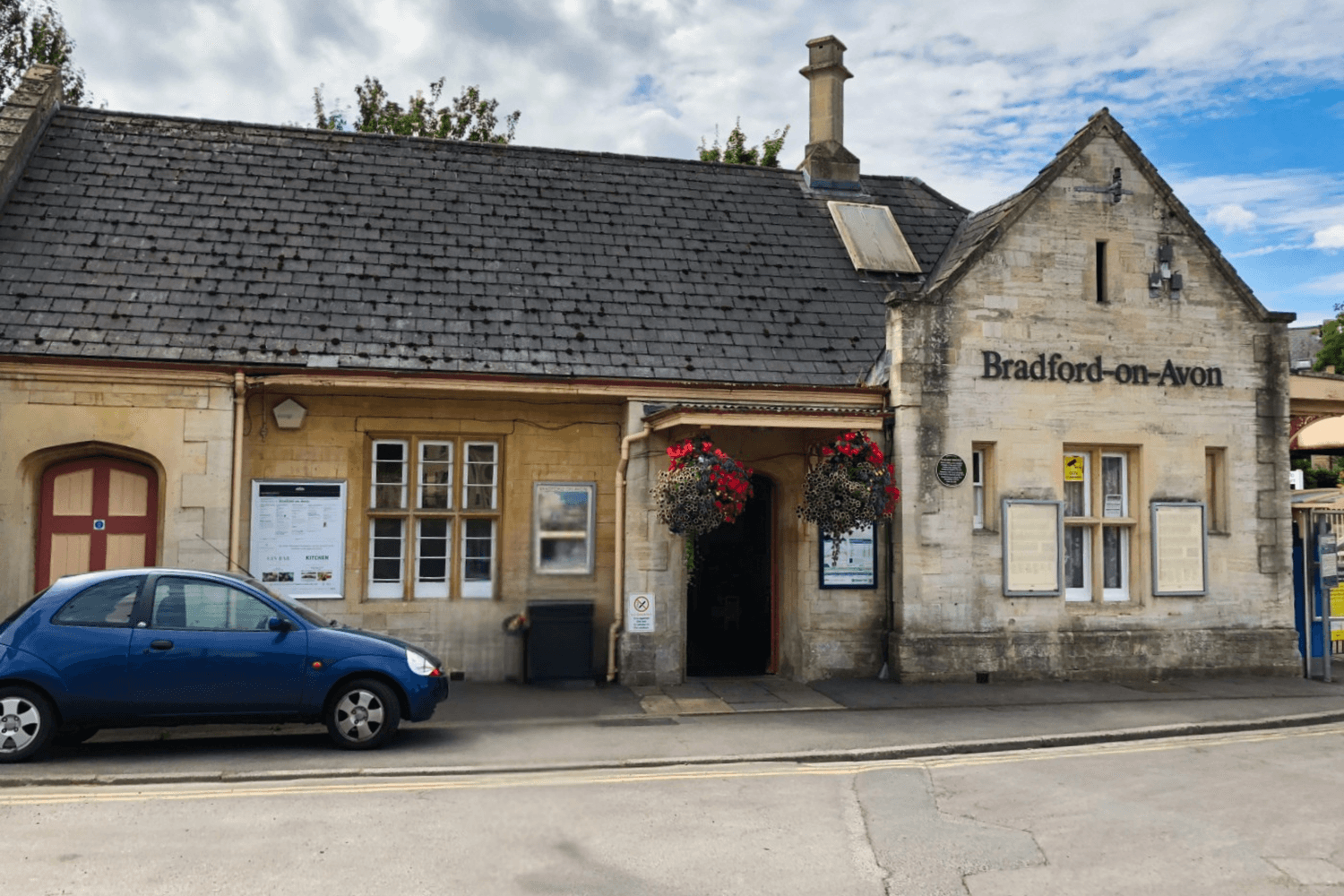
The tiny BoA train station.
The Third Option Nobody Mentions
Here's the version that doesn't get talked about enough.
Over a 10 - 14 day trip, you stay in two hotels.
Total. You move exactly once.
It works because of how you pick the base, not because you're settling for less.
A good hub is a town or small city that's well connected by rail, has enough going on that it holds your interest on its own (restaurants, cafes, whatever you're actually into), and sits within about an hour of several other places worth a day trip.
You wake up in the same bed every morning, catch a train out to see something different, and come back to the same room every night.
No repacking. No new check-in routine. No hunting for where the good coffee is in a town you'll leave in forty-eight hours anyway.
Staying five or more nights in one place changes the pace on its own. You can sleep in because you're not racing a checkout time.
You're not learning a new hotel every other day. It's slower without being static. You're still covering ground, just without carrying your suitcase to do it.
Why This Works Better Than It Sounds
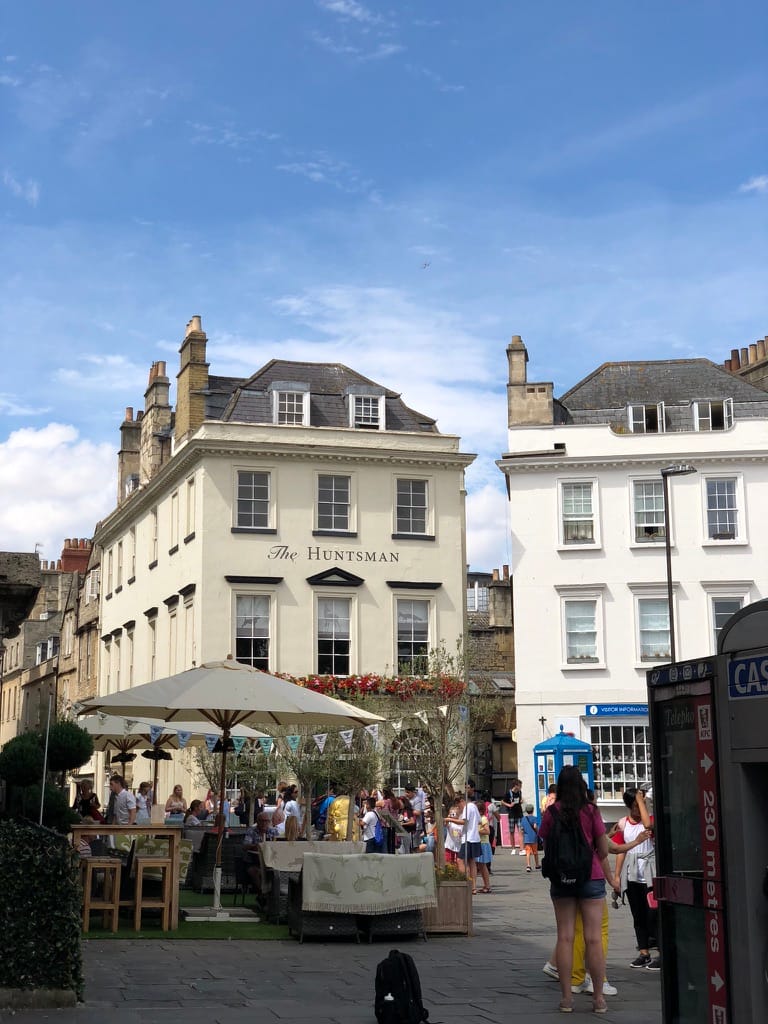
Bath, UK
The one-hour radius sounds small if you're used to American distances.
It isn't, once you're actually there. European rail moves fast enough that an hour out puts an entire second town on the table for a full day, there and back, without it eating your whole trip.
It's a different relationship with distance than we have at home. If your daily commute is over an hour each way like mine is normally, an hour to reach somewhere genuinely new for the day is nothing.
The pace is different too, and it's worth knowing that going in.
Walking through London at eight in the morning, the streets were nearly empty. Nine thirty, still fairly quiet.
Americans tend to start earlier and run longer days, for better or worse. So getting up at seven, catching a train, spending a full day somewhere new, and getting back to the hotel by seven or eight that night isn't a stretch.
It's how the days can go when you're not also managing a move.
Bradford-on-Avon, England works this way.
It's the example itinerary built around exactly this model: a hub with enough to do on its own, an easy 30 minutes to Bath, an hour to Salisbury, and a home base you never have to pack up until the trip is actually over.
The full Bradford-on-Avon itinerary is free, and it's built on this exact hub structure.
©Donna J Adams | Privacy policy | Terms & Conditions | Copyright Notice